Monday 6th May 1942
Dear Diary,
Today we arrived at Oxford University. It is a beautiful city and the university is very grand. There are lot of men here, but not a lot of woman scholars, so we stand out! The princesses had told us that we could expect the princess to be wonderful hosts, who would invite us into their living quarters, to stay in during our visit. However when we arrived, Boyet informed us that they intent to make us camp outside the university because of some ridiculous oath they've made, which means they can't be involved with women for the next three years whilst they study!! We were all outraged to hear that they intent to be such poor hosts. I was particularly annoyed because I am keen to get to know Dumaine better. I really like him and was hoping this trip would finally bring us together. I was tying to hide my feelings from the others, because I was embarrassed. But it would appear that Maria and Rosaline are also in love, so I don't feel as guilty as I did!! I was also happy to hear that Dumaine had talked to Boyet and was asking after me, which makes me think that he does not plan on sticking to his stupid oath and might actually try to court me whilst we are here. I hope he does!
Anyway, I better get some sleep now because I need to be rested for the hunt tomorrow.
Write soon.
Thursday 9th May 1942
Dear Diary,
Today I received a love letter and a pair of gloves from Dumaine. I was most disappointed with the gloves because they're such an unromantic gift! I was very jealous of Maria who received a chain of very expensive pearls from Longaville! When I told the princesses, Rosaline and Maria they all laughed at the gloves. I also told them how ridiculously long my love letter is, it rambles on and on, never really getting to the point. Of course, I am pleased Dumaine has decided to break his oath and is now pursuing me, however I do find his attempts rather amusing.
I was very delighted at the princesses idea to swap gifts and attend the ball pretending to be each other. I swapped gift with Maria, so that Longavile danced with me and Maria danced with Dumaine. I thought it was very fun and we all laughed about it after.
We are about to go and see the men now and hopefully we can have some fun, teasing them with what we did!
Write soon.
Friday 10th May 1942
Dear Diary,
How sad I am, the King has died. The poor princesses had the message delivered to them, just as we were beginning to get on with the princess and their men. We had resolved our differences and they admitted that they had come to the masked ball disguised as Russians. We had all sat down to enjoy the play that the 9 worthies had prepared, when it was interuppted by the sad news. Naturally, the princesses felt that they must return to France at once to deal with his death, however the princess tried to convince them to stay, declaring their love. After much talk, it was decided that the princesses will mourn their father for a year and after that year they will return to the princess. Dumaine then came up to me and asked what I plan to do. I told him that I would stay with the princesses and when they return, I shall return with them. I am happy with this arrangement because if Dumaine waits a year for me, it will prove the strength of his love.
I must go now, as we are travelling back to France today. I look forward to coming back next year.
Sunday, 5 June 2016

Historical Context- Question 3
WEEK 3 - SHAKESPEARE’S LONDON AND ELIZABETHAN AUDIENCES
QUESTION: What was London like in Elizabethan times and who were the people attending the theatre?
In the Elizabethan times, London was one of the biggest and richest cities in England. The majority of the city was situated on the north side of the river Thames.


Many wealthy people lived in London, mostly business owners and their workers. As trade grew in London, so did the city. People began to move from Europe and the country side, so every available piece of land was built on. The city expanded hugely and the suburbs grew more and more into the surrounding countryside. It is estimated
 that in the space of 50 years the population in London grew from 50,000 people to 200,000 people. The increased population meant that crime was a big issue. The dark, busy streets attracted thieves. The close proximity of living conditions in the city also meant that plague spread quickly and easily. In 1593 about 10,000 people were killed by the plague. In 1607, John Donne
called it “London, plague London, full of danger and vice”.
that in the space of 50 years the population in London grew from 50,000 people to 200,000 people. The increased population meant that crime was a big issue. The dark, busy streets attracted thieves. The close proximity of living conditions in the city also meant that plague spread quickly and easily. In 1593 about 10,000 people were killed by the plague. In 1607, John Donne
called it “London, plague London, full of danger and vice”.


Most of the theatres in London could house big audiences, some could take up to 3000 people, including the Globe. Most big theatres would put on a play every afternoon, suggesting that the demand was high. Between 10,000 and 20,000 people would go to the theatre every week! The theatre didn't just attract the wealthy, people of all different classes would go to the theatre. Servants and apprentices would go and watch plays in their spare time or days off. They could afford it, because the cheapest tickets, at the cost of a penny, would buy you a place standing in the yard around the stage. Then for two pennies, you could get a bench seat in the lower level, surrounding the yard. Theatres would charge three pennies if you wanted a cushion for your seat. One penny was only the cost of a loaf of bread, which compared to today's prices is incredibly cheap. The wealthy would also attend the theatre, but would not be seen standing in the yard! They would spend more money on getting a comfortable seat, high up in the stalls or if they were really wealthy they could afford to go to an indoor theatre.
The audience at the theatre were generally quite rowdy and would make their feelings known about whether they liked the play or not. The audience were very vocal and would boo the villains, cheer the heroes and applaud the special effects. The large crowds at the theatre attracted thieves, so fights would often break out. If an audience didn't like a play, they might walk out, throw things or damage the theatre.
My Annotated Script
When doing Shakespeare, it is really important to understand what you are saying. If the actor doesn't know what the words mean, there is no chance of the audience understating what they mean. With Love's Labour's Lost, the story is very complicated, so it is especially important that the story is conveyed to the audience clearly. It doesn't matter if they don't understand every single word, however the emotion and meaning has to come through in how you deliver the text.


Sunday, 24 April 2016
Rehearsals - week 2
Today we began by learning the dance routine that is going to go into our play. The dance is a 1940's style dance, which will fit with when we are setting play. We were taught the moves one by one, slowly putting them together. The moves are fairly simple, but look effective when we do them all in unison and keep in time to the music. The most difficult part is keeping up with the pace of the music, which is very fast! We need to keep practicing it so that we can eventually speed up and everyone can keep in time with each other and the music. I think that once we have it practiced it is going to look really effective. I think its important to have this dance scene in the play, because Shakespeare can sometimes confine the actor to less movement, so this will give the audience an opportunity to watch some creative physical work. Here is a video of a 1940's dance, which gives an idea of the music and style of our dance...
Tuesday, 12 April 2016
Historical Context - Question 2
Research Shakespeare's life- find out what his origins are, his family, his relationships, the world that he lived in and the questions surrounding his work (did he write all his plays? etc)

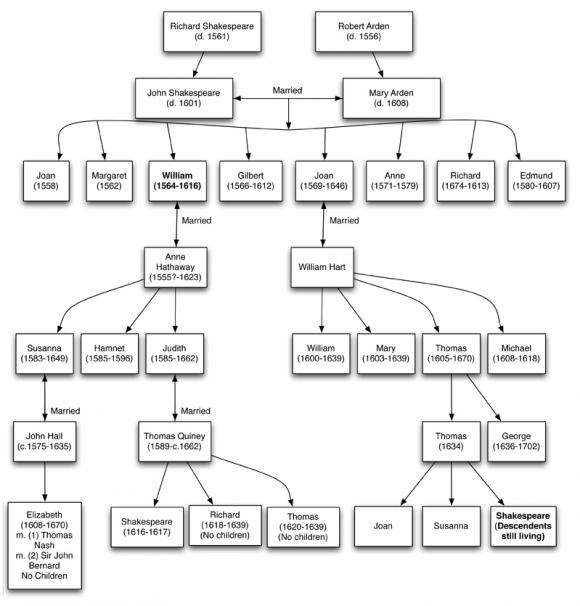
Shakespeare was born in 1564 in Stratford upon-Avon, Warwickshire. His birth date is unknown, but he was christened on 26th April 1564. Shakespeare's father was a successful was a glove-maker and wool trader and his mother was the daughter of a farmer. When Shakespeare was four, his father became the made mayor of Stratford. He was the third of eight children, however he grew up as the oldest because his two older sisters were killed by the plague, which wiped out plague killed about 200 people in Stratford in 1564.
Shakespeare went to the grammer school in Startford, called King's New School. Education for boys consisted of learning to read, speak and write in Latin. They would also learn history by memorising and performing scenes from the past, helping him with his theatrical career. His father had financial and social difficulties, which meant that he had to be taken out of school when he was about 14 or 15.
When he was 18, he married Anne Hathaway who was 26 and the daughter of a local farmer. Six months after they were married, Anne gave birth to their daughter, Susanna, then two years later they had twins, Hamnet and Judith. For the first part of their married life, they would have lived in Shakespeare's house with his parents. Later they moved to New Place, a large house in Stratford, however Shakespeare spent most of his time away from them, in London.

When Shakespeare was in London he started writing and by 1592, several of his plays had been put on stage, including Henry VI, which was performed at the Rose theatre. He wrote 40 plays during his career. He had rival playwrights from more educated backgrounds, who thought he was reaching above his ranks. He also wrote poems and in 1906 he had a book of 154 sonnets published. He was also a part owner of a theatre company called 'The Lord Chamberlain’s Men' and by 1599, he partly owned the Globe theatre.
After the year of 1913, he began to spend less time in London and more time in Stratford. He made a will and left everything to his daughter, saying that she should leave his estate to her first born son, but she never had a son. It isn't known exactly how Shakespeare died, but he was very sick and eventually died on the 23rd of April 1616. He is buried in Holy Trinity church in Stratford-Upon-Avon.

Shakespeare was born in 1564 in Stratford upon-Avon, Warwickshire. His birth date is unknown, but he was christened on 26th April 1564. Shakespeare's father was a successful was a glove-maker and wool trader and his mother was the daughter of a farmer. When Shakespeare was four, his father became the made mayor of Stratford. He was the third of eight children, however he grew up as the oldest because his two older sisters were killed by the plague, which wiped out plague killed about 200 people in Stratford in 1564.
Shakespeare went to the grammer school in Startford, called King's New School. Education for boys consisted of learning to read, speak and write in Latin. They would also learn history by memorising and performing scenes from the past, helping him with his theatrical career. His father had financial and social difficulties, which meant that he had to be taken out of school when he was about 14 or 15.
When he was 18, he married Anne Hathaway who was 26 and the daughter of a local farmer. Six months after they were married, Anne gave birth to their daughter, Susanna, then two years later they had twins, Hamnet and Judith. For the first part of their married life, they would have lived in Shakespeare's house with his parents. Later they moved to New Place, a large house in Stratford, however Shakespeare spent most of his time away from them, in London.
When Shakespeare was in London he started writing and by 1592, several of his plays had been put on stage, including Henry VI, which was performed at the Rose theatre. He wrote 40 plays during his career. He had rival playwrights from more educated backgrounds, who thought he was reaching above his ranks. He also wrote poems and in 1906 he had a book of 154 sonnets published. He was also a part owner of a theatre company called 'The Lord Chamberlain’s Men' and by 1599, he partly owned the Globe theatre.
After the year of 1913, he began to spend less time in London and more time in Stratford. He made a will and left everything to his daughter, saying that she should leave his estate to her first born son, but she never had a son. It isn't known exactly how Shakespeare died, but he was very sick and eventually died on the 23rd of April 1616. He is buried in Holy Trinity church in Stratford-Upon-Avon.
Thursday, 7 April 2016
Historical context - Question 1
QUESTION: What sense do you get of what life was like in Elizabethan England? Try to include information on: The population, entertainment, religion, superstition, money, jobs, medicine, theatre.
 In the Elizabethan times, there was a very clear class divide. Either you were very wealthy, possibly a member of the royal family, or you were poor, living off a very small wage. People living in poverty would often live dotted around the countryside, labouring on nearby farms to earn their money. The families of these labourers would have to live in small, dark houses, often made up of just one room. These houses would normally hold about seven or eight people. Living conditions were poor with damp, earth floors, smoke filling the space and draughty windows allowing the cold in. It was difficult to find work, because labourers were often only employed on a casual basis, so there was no stability. People would have to go from farm to farm looking for work, usually getting turned down. Life was very difficult, especially if you had a family to provide for.
 Rich people in the Elizabethan times often held a high positioned job, such as a sheriff, MP or magistrate and were known as landed gentry. The landed gentry were elected to fill the house off commons and they had huge power. The homes of the rich were grand and often decorated with expensive things, such as carpets, portraits, mirrors and calved wood. They would be rich enough to employ servants, ranging anywhere from two to twenty, depending on how rich you were. Cleanliness was very important to the wealthy, they would stay clean by keeping their clothes washed and changing their undergarments every day. Perfumes were used to keep the smell of skin, hair and clothes pleasant.

For entertainment, people would often go to watch plays. Shakespeare made going to the theatre very popular in this period. The theatre was very different to how it is now, there was very little set and costume. The actors had to do everything themselves because there wasn't a director and thee were no stage directions. The theatre was very important to people and they would sit or stand for hours watching a play, dedicating their whole Sunday to the theatre. Another form of entertainment was something called 'bear baiting', where a bear was tied to a post and dogs were released who try to attack the bear. People would make bets on who would win the fight. Queen Elizabeth was very keen on this sport, she loved it so much that she forbid plays to be on a Thursdays, so that people could enjoy bear baiting.

The two major religions in the Elizabethan era were Catholic and Protestant religions. It was not a crime to be catholic, but there was no legal way for Catholics to practice their face. Queen Elizabeth was a protestant and she made protestantism as the official religion. When she first ruled the throne, she tried to tolerate Catholics and allowed the practice of the religion. But as her reign continued, punishment for being a catholic became worse and the execution of priests become popular.
 In the Elizabethan times, there was a very clear class divide. Either you were very wealthy, possibly a member of the royal family, or you were poor, living off a very small wage. People living in poverty would often live dotted around the countryside, labouring on nearby farms to earn their money. The families of these labourers would have to live in small, dark houses, often made up of just one room. These houses would normally hold about seven or eight people. Living conditions were poor with damp, earth floors, smoke filling the space and draughty windows allowing the cold in. It was difficult to find work, because labourers were often only employed on a casual basis, so there was no stability. People would have to go from farm to farm looking for work, usually getting turned down. Life was very difficult, especially if you had a family to provide for. Rich people in the Elizabethan times often held a high positioned job, such as a sheriff, MP or magistrate and were known as landed gentry. The landed gentry were elected to fill the house off commons and they had huge power. The homes of the rich were grand and often decorated with expensive things, such as carpets, portraits, mirrors and calved wood. They would be rich enough to employ servants, ranging anywhere from two to twenty, depending on how rich you were. Cleanliness was very important to the wealthy, they would stay clean by keeping their clothes washed and changing their undergarments every day. Perfumes were used to keep the smell of skin, hair and clothes pleasant.
For entertainment, people would often go to watch plays. Shakespeare made going to the theatre very popular in this period. The theatre was very different to how it is now, there was very little set and costume. The actors had to do everything themselves because there wasn't a director and thee were no stage directions. The theatre was very important to people and they would sit or stand for hours watching a play, dedicating their whole Sunday to the theatre. Another form of entertainment was something called 'bear baiting', where a bear was tied to a post and dogs were released who try to attack the bear. People would make bets on who would win the fight. Queen Elizabeth was very keen on this sport, she loved it so much that she forbid plays to be on a Thursdays, so that people could enjoy bear baiting.

The two major religions in the Elizabethan era were Catholic and Protestant religions. It was not a crime to be catholic, but there was no legal way for Catholics to practice their face. Queen Elizabeth was a protestant and she made protestantism as the official religion. When she first ruled the throne, she tried to tolerate Catholics and allowed the practice of the religion. But as her reign continued, punishment for being a catholic became worse and the execution of priests become popular.
Tuesday, 5 April 2016
Research- 1940's fashion
In the 1940's, woman's fashion became more military because of the second world war. The padded shoulders on their dresses were more masculine, but also created a certain shape that was considered desirable. The broad shoulders highlighted the tight waist band, making the figure an 'hourglass' shape.
Because of the war, there was a shortage of fabric. Strict fabric rationing meant that dresses had to be made shorter, becoming knee length, as appose to down to the calf, which was how they were in the 1930's.
The neck lines on these dresses revealed very little skin. They were modest, with no cleavage. They were often a 'v' or cross front neckline and a lot of the dresses would have collars.
Before the war fabric choice was very limited and dresses often had to be plain, dull colours. However in the second half of the 40's, more varied, colourful and patterned fabrics became available. After the hardship of the war, women embraced being able to dress in more exciting clothes.
Plus size fashion became more prominent than it had ever done before. A lot of the dresses didn't suit women who didn't have the ideal 'hour glass' figure, so departments stores created a 'Stout' clothing line, which included clothes more faltering to a fuller figure.


Subscribe to:
Posts (Atom)